

5 Common Mistakes Expert Witnesses Make in Depositions
Attorney Kimberly Beck
Expert depositions are stress tests. Opposing counsel isn’t just probing your opinions—they’re testing your methods, your memory, your communication style, and your credibility. A strong report can stumble if the expert mishandles a few key moments under oath. Here are five common mistakes experts make in depositions and how to avoid them.
1. Treating the deposition like a debate instead of a record
Mistake: Experts sometimes try to “win” each exchange, spar with the lawyer, or perform for their client. That impulse leads to long, argumentative answers, sarcasm, and volunteered tangents that hand the examiner fresh lines of attack. It also creates soundbites that look evasive on paper, even if you were right on substance.
Fix: Think “clean record,” not “mic drop.” Listen fully, pause, answer only the question asked, then stop. Use plain language and short sentences. If a question contains a false premise, correct it once and then answer the narrowed question: “The premise is inaccurate because X; assuming Y instead, my answer is Z.” Keep your tone steady. You are there to teach the trier of fact, not to outwit opposing counsel.
2. Straying beyond disclosed opinions or the disclosed materials
Mistake: Under pressure, experts speculate outside their report, cite articles they never disclosed, or offer new opinions “off the cuff.” That can invite a motion to exclude, limit testimony at trial, or paint the expert as a hired advocate rather than a disciplined scientist or professional.
Fix: Stay within your lane. Anchor answers to your report, work file, and disclosed reliance materials. If asked about a topic you did not analyze, say so clearly: “That falls outside the scope of my assignment.” If a question asks for an opinion you did not disclose, say: “I did not offer that opinion in my report.” When appropriate, add: “If asked to analyze it, I would need A, B, and C.” This shows rigor without inventing new ground.
3. Overstating certainty—or, conversely, retreating into hedges
Mistake: On one side, experts use absolutes (“always,” “never,” “certainty”) that crumble under a single counterexample. On the other, they drown straightforward conclusions in qualifiers (“possibly,” “could be,” “it depends”) that read as weak or evasive. Either extreme undermines credibility and invites impeachment with your own words.
Fix: Calibrate to your discipline’s standard. Use probability language you can defend: “within a reasonable degree of medical/engineering/accounting certainty,” or “more likely than not, because…” Explain the basis briefly—data points, methods, and key assumptions. Avoid absolutes unless they are truly warranted; avoid habitual hedging where your method supports a clear conclusion. If confidence varies across sub-issues, say so: “On causation, I’m confident because X data are robust; on duration, confidence is lower because Y records are incomplete.”
4. Losing command of your file, sources, and methods
Mistake: Experts who can’t locate calculations, misremember citations, or contradict their own report invite damaging “gotcha” moments. Common tripwires include version control failures (working from a draft), unlogged assumptions, reliance on unproduced materials, and untested spreadsheets that embed errors.
Fix: Prepare like a pilot with a checklist. Before deposition:
- Read your final, served report line by line; note page/line anchors for key conclusions.
- Re-run core calculations and print the outputs you relied on. Bind workpapers in logical order.
- Create a source index: articles, data sets, standards, and where each supports a conclusion.
- Confirm that every relied-on material was disclosed or produced; if not, flag it for counsel.
- Track assumptions explicitly and be ready to explain why each is reasonable. During deposition, if shown an unfamiliar document, say so and read it before answering. If asked about a calculation, open the workpaper and walk through it slowly. Precision beats speed.
5. Mishandling hypotheticals and changing facts
Mistake: Hypotheticals are designed to bend your opinion. Many experts either resist all hypotheticals (looking rigid) or accept unrealistic ones that make their conclusions appear flimsy. Others change opinions midstream without marking the change, letting counsel portray them as unreliable.
Fix: Set and use ground rules. A proper hypothetical must be clear, finite, and stated assumptions must be explicit. Respond in a three-step structure:
- Restate the assumption: “Assuming, for the sake of the question, that X, Y, and Z are true…”
- State the conditional answer: “…then my conclusion would be A.”
- Re-anchor to reality: “However, those assumptions differ from the record I reviewed, where B and C hold; under the actual record, my opinion remains D.” If a fair new fact would genuinely change your view, acknowledge it and explain why: methods should drive outcomes. Mark the change as hypothetical-dependent so counsel can’t miscast it as a retreat from your disclosed opinion.
Practical habits that raise credibility across all five areas
Mind the scope: Know exactly what you were retained to do—and not to do. When in doubt, state the boundary. Speak like a teacher: Replace jargon with accessible terms and short explanations of method (“I compared A and B with industry standard C”). Own limits: “I don’t know” and “I don’t recall specifically, but the report at page 12 summarizes the data” are better than guesses. Keep your cool: Long pauses, eyebrow raises, or sarcasm read badly in transcripts and on video. Breathe, pause, answer, stop. Coordinate with counsel beforehand: Agree on exhibits, privilege boundaries, and how to handle disputes (e.g., break requests, instructions not to answer). Review the transcript: Correct transcription errors on the errata sheet; avoid substantive rewrites that can be used against you.
A closing perspective
Great expert testimony blends rigor with clarity. The deposition is where both show—or don’t. If you treat it as record-building rather than point-scoring, stay within disclosed work, calibrate your confidence, command your files, and handle hypotheticals with structure, you’ll project exactly what judges and juries reward: a careful professional whose conclusions follow the facts and methods, not the retainer. That credibility carries through motions, settlement negotiations, and, if needed, the stand.
For additional information about preparing for a deposition as an expert witness, click Expert Witness Deposition: What to Expect and How to Prepare.
I also recommend preparing for your expert deposition by reviewing this article: How to Prepare for a Deposition – Beck Law Center.
Click any of the buttons here to learn more about our practice areas:
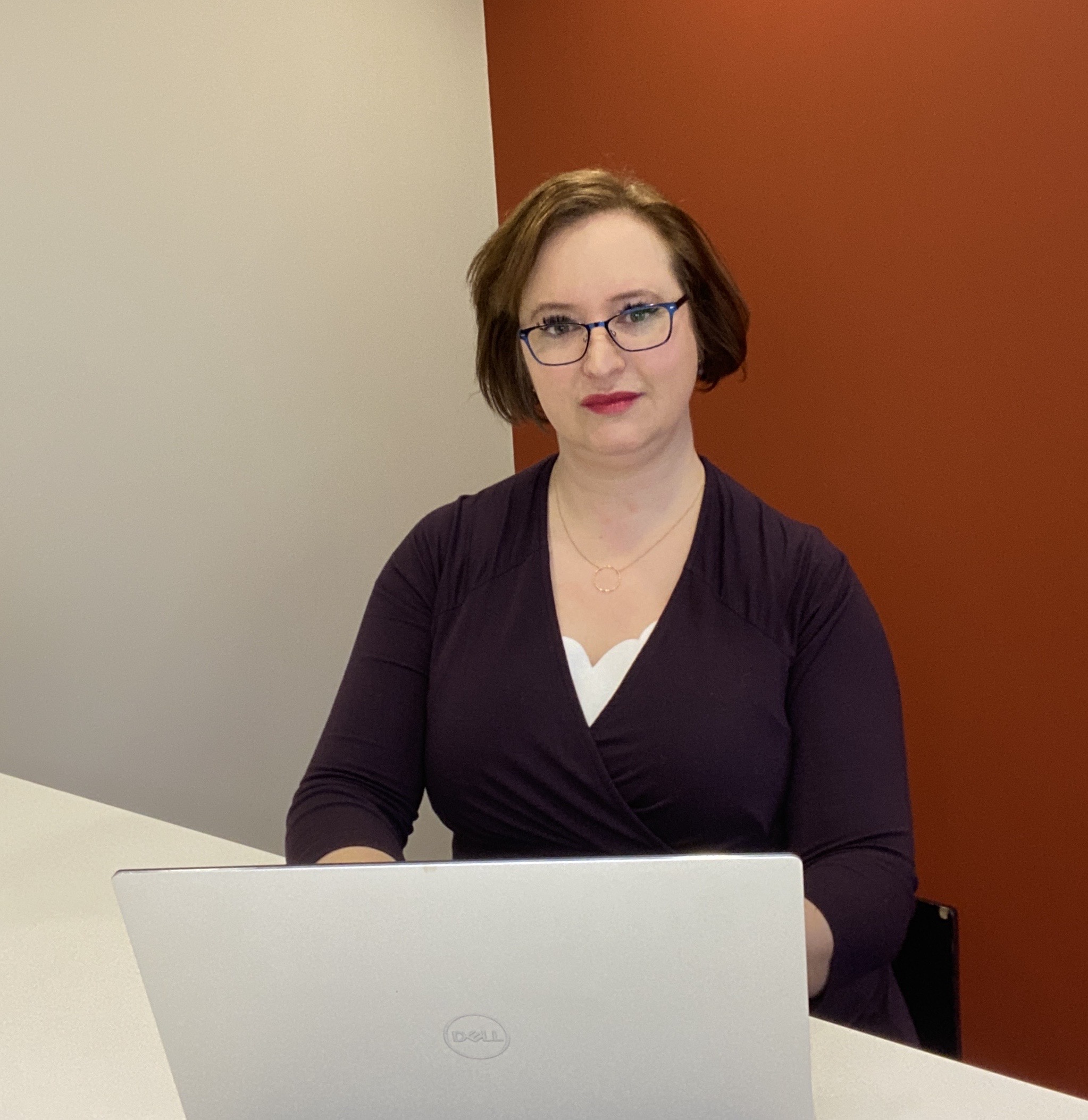
Attorney Kimberly Beck Cincinnati, Ohio
Attorney Kim Beck is the managing member of Beck Law Center, located in Cincinnati, Ohio. She has 15 years of experience as an attorney, mostly on the defense. She now represents plaintiffs in personal injury cases involving a variety of injuries caused by defecting drugs/ pharmaceuticals, medical malpractice, and other series accidents. If you would like more information about her background and experience, please review her profile page.
Attorney Advertisement. Beck Law Center provided this post as general information and should not be construed as creating an attorney/client relationship. It may not reflect the current law in your jurisdiction. It is not intended as a substitute for legal advice. Further, this correspondence is not protected by privilege. No reader of this post should act or refrain from acting on the basis of any information included in, or accessible through, this Post without seeking the appropriate legal or other professional advice on the particular facts and circumstances at issue from a lawyer licensed in the recipient’s state, country or other appropriate licensing jurisdiction.